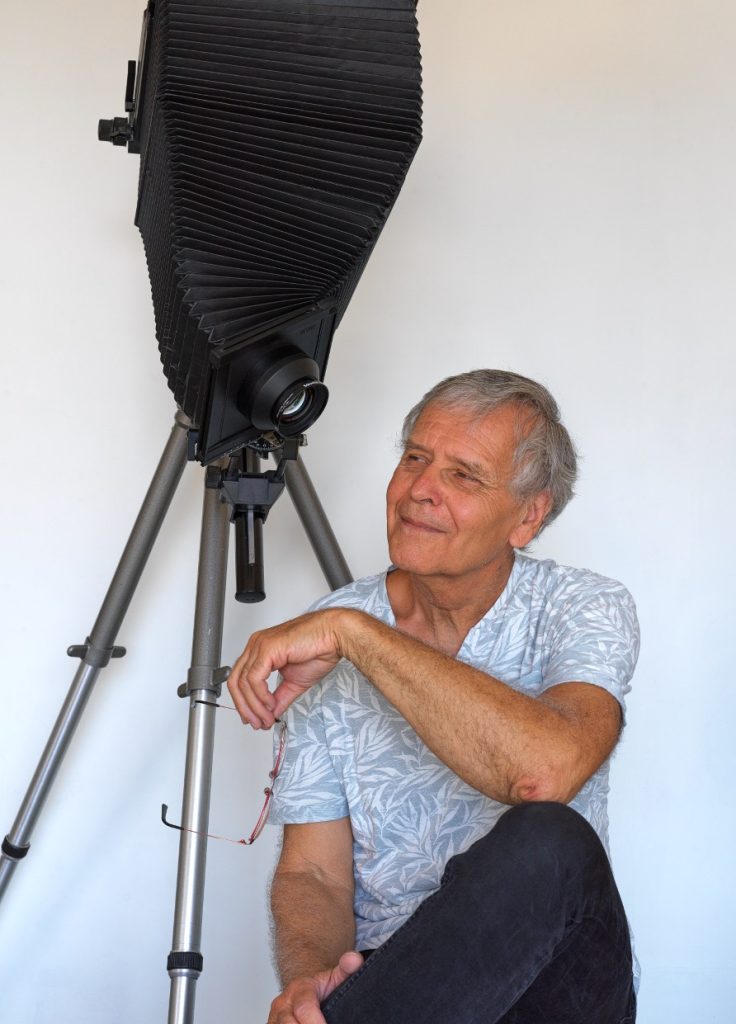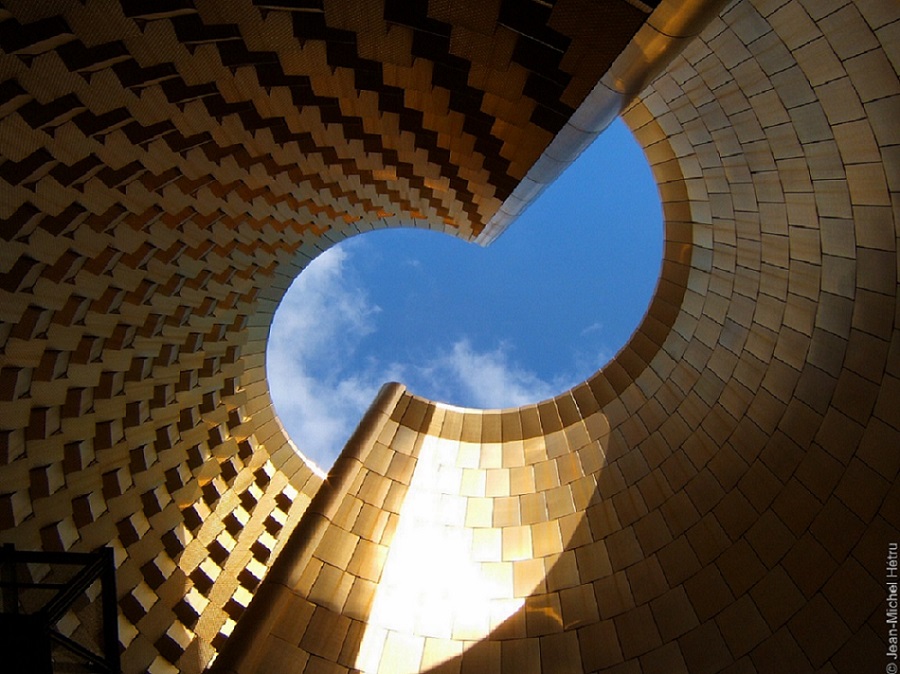
After a doctorate dedicated to the image in cinema, a hesitation between cinema and photography, then working as researcher in human sciences, author and editor, Jean-Michel Hétru chooses professional photography in 2006 then switched to fine art in 2011.
His work revolves around the fascinated, astonished, ironic, humorous or tender observation of culture, behavior, history, and nature too, and undoubtedly of the existence.
A specialist in the realm of the imagination, he never tires of exploring the human sphere and its creations in all their forms.
Deliberately oriented towards a multidisciplinary approach, which he considers enriching because dangerous, he likes the fantastic as Roger Caillois envisioned it : a crack that knocks one off the rails and leads to the discovery of something else.
However, we cannot be satisfied with the immensity of habit and homogeneity, just as we cannot live with only the prospects of misery and horror that assail us from all sides. We are beings of contrast and balance. And we need contrast and rebalancing, which is what fantasy allows, opening up pleasure, questioning, complicity, emotion, or awareness. Do yourself good by infiltrating discreet ruptures, by denouncing powerful constraints, by laughing too. And feel good to move foward. It is this approach that underlies his work.
He rarely relies on chance. Generally speaking, simply pressing the shutter whenever “something interesting” appears seldom satisfies him. Because he is rarely alone and things move too fast. Because he requires slowness, time for ideas to mature and solitude.
As he wanders alone or in company, he spots small, seemingly insignificant details. Some catch his eye, while others, though long familiar to him, have never quite resonated. In such cases, time does its work.
He works like a painter: he identifies a subject, makes a note and returns to find the perfect moment. Gradually, what once only faintly piqued his interest begins to emerge and assert itself. Everything falls into place : light and shadow, the focal length and the technical craft required to realize his initial intuition and, ultimately, to go beyond it.
It takes him at least two weeks to feel truly satisfied with a shot. And even when things move a bit faster, there are always projects that must be postponed, requiring him to wait until the following year for them to return.
For his photographs are not the result of a random convergence of phenomena, rather, what he has noticed which happen to repeat themselves.
He detests the camera taking a picture on his behalf. To him, automation is no more an advantage than a spell-checker that insists on replacing his chosen word with another. He likes equipment that functions as a partner, far removed from that of a mere tool, or worse, a form of servitude : the technical demands imposed by the camera are opportunities to further refine the photograph.